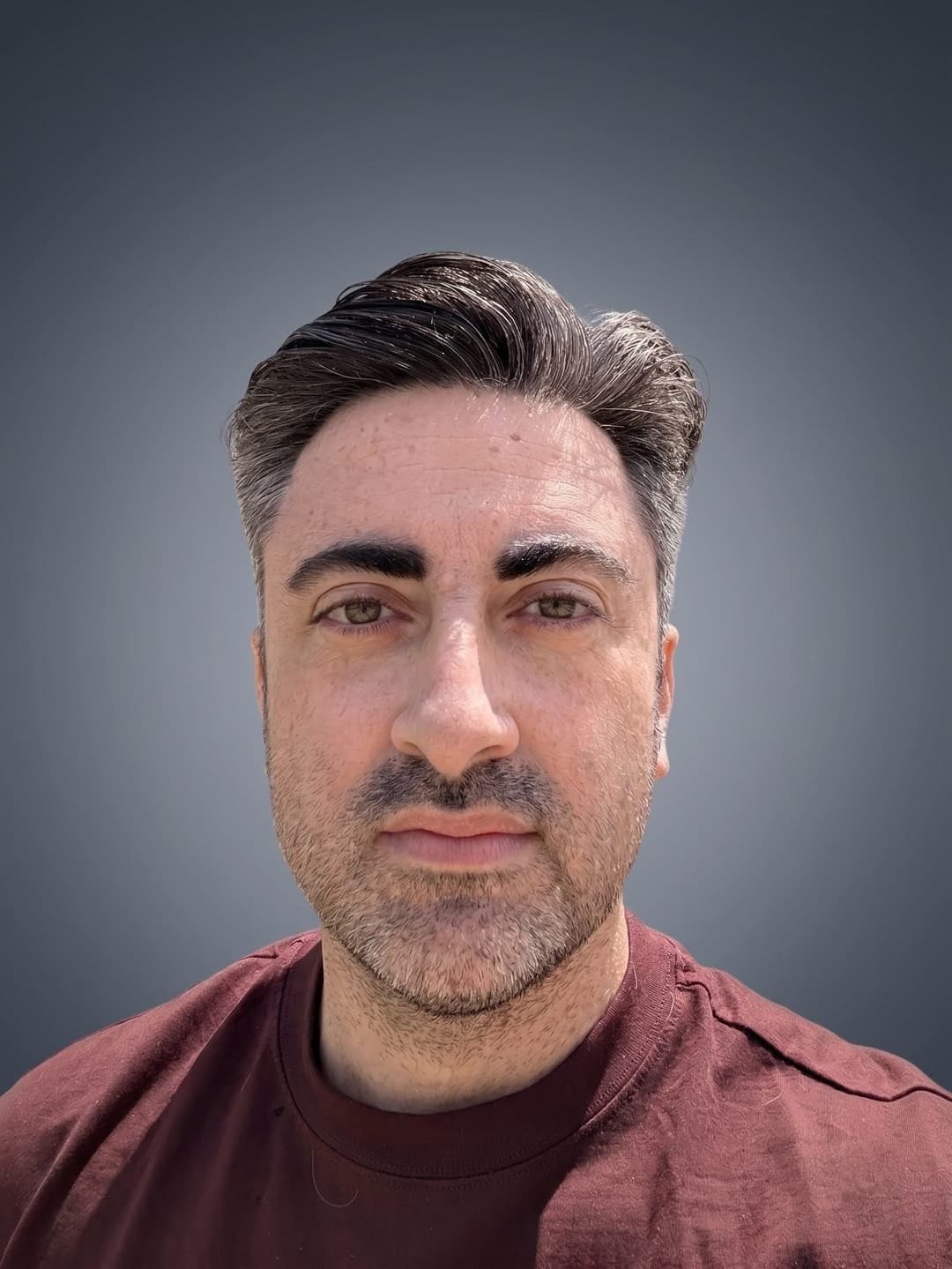
Michael Korenevsky / Senior Product Manager

I turn complex industrial AI into products customers trust and use.

I lead enterprise software from customer discovery through launch. I choose the work that protects uptime, makes adoption easier, and creates measurable value.

Trusted by enterprise customers

Baker HughesThalesElos Medtech3D SystemsBeehive

01 / Product work

Selected product work

The outcome comes first. Then see the customer problem, my role, the decisions I made, and the evidence behind the work.

01

Product work

Turned an alert-heavy AI pilot into a trusted product used by five enterprise customers

Senior PM, AI PlatformOqton · 2025–Present
98%
Reduction in active monitoring time, Baker Hughes
18%
Scrap cost reduction via mid-run failure detection
5
Enterprise clients in 5 months

The challenge

Turn an AI monitoring pilot that operators did not trust into a product customers could buy, install, and rely on.

My role

Led product strategy from customer discovery through requirements, pricing, launch, and deployment. Led an international group across 6 engineers, 2 designers, 2 marketing partners, 3 sales partners, and 5 application engineers.

Selected customersBaker Hughes · Thales · Elos Medtech · 3D Systems · Beehive

03 / Product decisions

The decisions that made the product useful

Each choice starts with the customer problem and ends with the practical result.

  • Decision 01

    Signal over noise

    Outcome: ~90% fewer layers for engineers to review

    Operators were reviewing alerts on roughly 3,000 of 6,000 layers, so they could not tell which events needed action. I set rules that required the same issue across multiple layers before raising an alert. That cut the review set by about 90% and let engineers focus on genuinely critical events.

  • Decision 02

    Roadmap judgment

    Outcome: better operator visibility and protected uptime

    In the closed on-premise environments we served, a few known users could work without SSO. The more urgent customer need was knowing when the system was unhealthy, so I deferred SSO and shipped Diagnostics first. That gave operators a way to spot and fix reliability problems before production was disrupted.

  • Decision 03

    Enterprise adoption

    Outcome: self-deployment in one day, not days of support

    Command-line installation made customers depend on days of technical support before they could see value. I prioritized a guided installer and documentation so they could self-deploy in one day and begin using the product without waiting on our team.

We've seen a 98% reduction in engineering review time per build, allowing our team to focus on more critical tasks. This, combined with an 18% reduction in scrap costs, has delivered a powerful return on investment.
Amar Patel · Digital Transformation Lead, Baker Hughes

02

Product work

Turned a third-party physics engine into an enterprise product that helped manufacturers get 3D-printed parts right on the first production run

Product Manager, SimulationOqton · 2022–2025
80%
Fewer dimensional errors on a large-format industrial part, 20+ hour production run
~100%
Of dimensional distortion compensated by predictive pre-deformation
<150µm
Maximum measured deviation on the same large-format part

The challenge

Turn a third-party physics engine into a product that helped manufacturers predict how a 3D-printed part would behave before committing time and material to a production run.

My role

Led 5 engineers, 2 designers, 2 sales partners, and 2 application engineers from first launch through enterprise adoption. Turned complex physics into a workflow manufacturing engineers could use, then tested it with customers.

Selected customersKnauf · Emerson · Wärtsilä

03 / Product decisions

The decisions that made the product useful

Each choice starts with the customer problem and ends with the practical result.

  • Decision 01

    From engine to production tool

    Outcome: more accurate predictions before committing to a production run

    At first, the product predicted separate parts of the printing process. I led the move to a complete thermo-mechanical prediction that captured the full picture. Manufacturers could make higher-confidence production decisions before spending time and material on a build.

  • Decision 02

    Made it usable

    Outcome: manufacturing engineers could use it without specialist infrastructure

    Manufacturing engineers needed a tool they could run without simulation specialists or dedicated servers. I made standard workstation support and clear pass/fail outputs product requirements, so more teams could use the product with confidence.

  • Decision 03

    Proved it before launch

    Outcome: confidence to change a production process

    Customers would only change a production process if the predictions matched real parts. I tested the results with Knauf and Emerson before launch, giving users confidence in the predictions and the launch team measured proof.

We have achieved a lightweight component we would have never imagined creating before this project. This application creates new sparks for more AM applications in the marine industry.
Francesco Trevisan · AM Expert, Wärtsilä

02 / How I work

How I lead product work

I turn customer evidence, engineering constraints, and commercial input into a focused plan the team can build and customers can adopt.

01

Find the problem worth solving

Use customer conversations, support patterns, sales input, and product data to understand the real problem before defining a feature.

02

Choose work by customer value

Set the user and business outcome first, then prioritize options by customer value, impact, and effort. Explain what the team will solve first and why.

03

Build the right workflow

Use early prototypes to learn what engineering can build, shape the scope together, and test the workflow with customers before development begins.

04

Make adoption part of launch

Carry the work through customer testing, onboarding, documentation, and sales materials so customers can start using the product with confidence.

03 / Experience

Product leadership, built on engineering depth

A product career grounded in the realities of complex industrial software and the cost of getting it wrong.

Product leadership
2025–Present
Oqton·Senior PM, AI Platform

Built the product strategy and launch path that brought an enterprise AI platform to five customers in five months.

Led customer discovery, requirements, pricing, launch, and deployment with engineering, design, marketing, sales, and application engineering.

2022–2025
Oqton·Product Manager, Simulation

Turned a third-party physics engine into a product that helped manufacturers get 3D-printed parts right on the first production run.

Led productization and enterprise adoption with engineering, design, sales, and application engineering partners.

Engineering foundation
2017–2022
3D Systems·QA Team Lead

Built the QA function and led release certification for enterprise CAD/CAM software.

2015–2017
3D Systems·QA Engineer, Founding Team

Created the first validation frameworks for a new generation of manufacturing tools.

2012–2015
Cimatron·QA Engineer

Certified CAD/CAM software for tooling manufacturers across Europe and North America.

My QA background means I treat reliability as part of the product experience: find the failure mode, validate the workflow, then ship with confidence.

04 / Background

Why my background helps

A reliability-first approach to product leadership, built in environments where getting it wrong is expensive.

Michael Korenevsky

I build products people can depend on when getting it wrong is expensive.

Mechanical engineering and years validating industrial software taught me to look beyond a feature working in a demo. I look for failure modes, unclear workflows, and adoption barriers that appear when a customer has to rely on the product in the real world.

That perspective now shapes how I lead product work: start with the people doing the job, turn technical complexity into a workflow they can use, and validate the result before asking them to change how they work.

Reliability mindset

I treat uptime, clarity, and deployment as part of the product experience.

Complexity, made usable

I work with engineering to turn AI and physics into workflows customers can understand and trust.

From build to adoption

I carry the work through customer validation, launch, installation, and feedback.

B.Sc. Mechanical Engineering, Ben-Gurion University · Hebrew, English, Russian · Israel, open to remote and hybrid roles

Open to senior product roles

Let's build a product customers can depend on.

I'm looking for work where customer discovery, technical depth, and enterprise execution matter.